About / The Vessel
The Vessel
The world this work lives in
Anyone can build a pretty website
Right now you can type a sentence and get a beautiful image back. So can everyone else. That's the whole problem. For about thirty years, looks good was a signal. It meant someone cared, someone spent the money. Now it costs nothing and takes ten seconds, which means it signals nothing. Worse, the default look has quietly become a tell. It says nobody was really here.
So the value moved, the way it always does. The hard thing now is making something that could only have come from you: an identity expensive to fake because it sits downstream of an actual person and an actual reason. The tools got so good that good is over. What's left is being unmistakably yourself, on purpose.
When it came to building my own website experience, there was an easy answer sitting right there: buy the template. I wanted to do the thing that's still genuinely hard. Build a unique identity on top of what's already easy to make. The hard part is the context and thought that goes into it... the consistency, the visual identity, and the voice you feel across everything the product touches.
A built world compounds
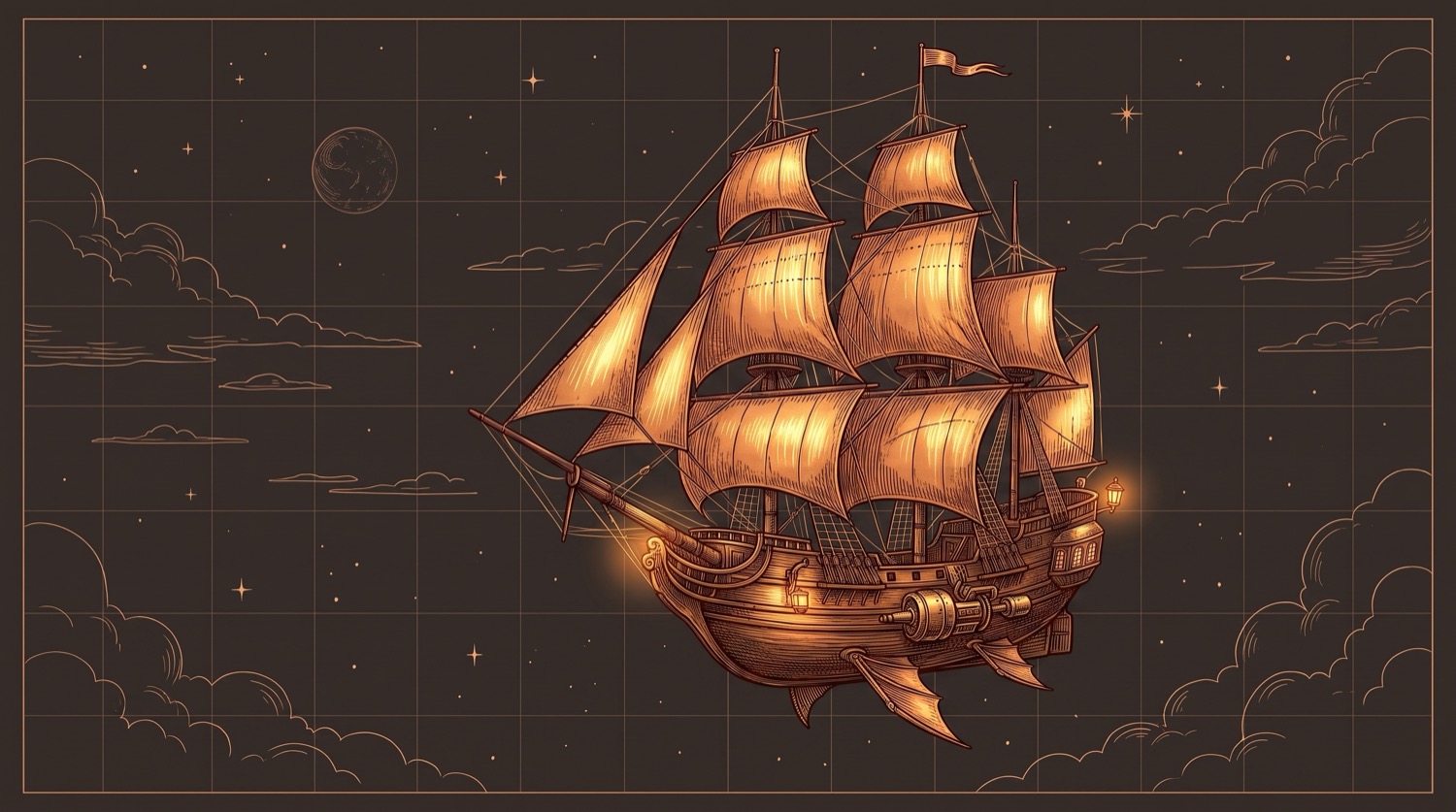
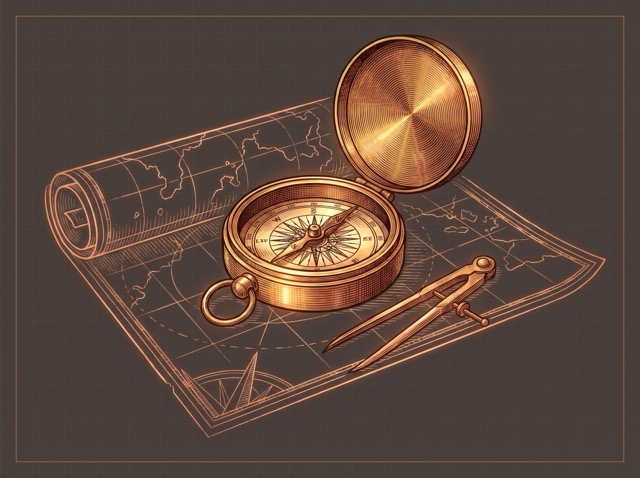
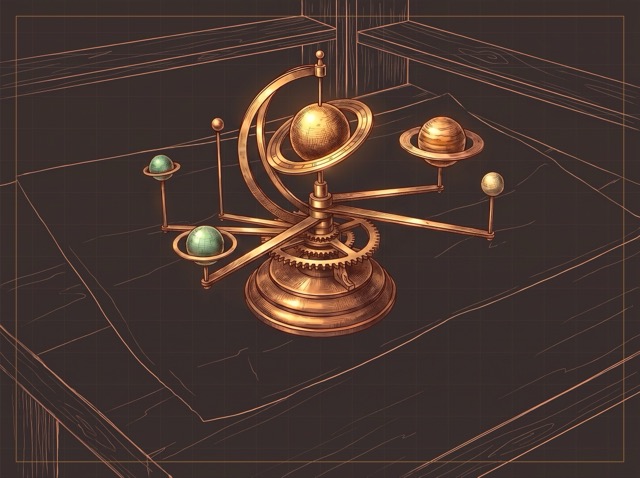
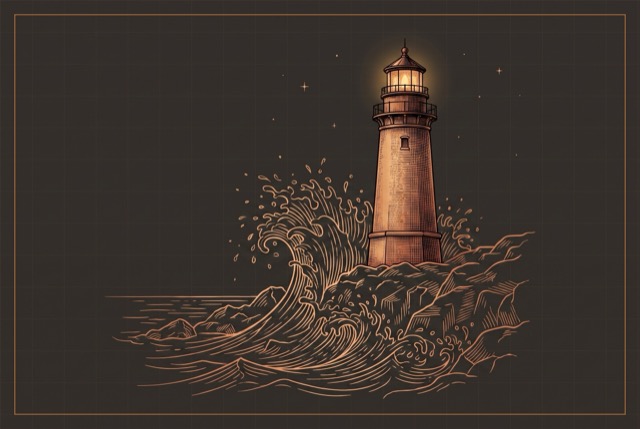
Every picture on this site comes from one world: copper line art, warm engraving, brass instruments, exactly one glowing light per scene. Every image and design points back at the same story, so the whole thing reinforces itself the more it's seen and used. A template does the opposite. Interchangeable things are forgettable by design.
The world has a ship at the center of it, built plank by plank and rigged for water her charts don't finish. Those unfinished charts are the point. A blank chart is ignorance; an unfinished one is an invitation. Every generation gets a frontier where the known world runs out, and ours is the future arriving faster than anyone can map it: what becomes possible this year that wasn't last year, which industries get remade, how much one focused person can now run. She was built for that water. The work is exploration... sail toward the edge of the map, take a sighting, come back and draw it in.
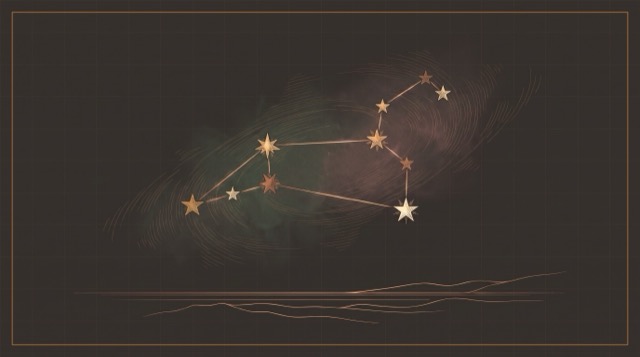
The crew signs its work
She runs on a crew, and every member has a name. Ten AI systems do real work here: research, planning, instruments, writing, markets, curation, distribution, illustration, film, and the final edit. Each one owns its trade and signs what it ships. When a byline reads "with Faulkner", that names the system that did the work, and you can read exactly what it answers for.
None of them is the captain. That's the human at the wheel, and every recommendation on this site runs under his name. The crew takes credit for the work it did. That's the whole model: the reader always knows who made what.
How she sails inside the work
The metaphor holds up because every part of it maps to something real. This site is her log: the essays and columns are entries written on the way somewhere, dated, signed, and public. The B4 Index is her instruments: readings taken on 1,600 software categories and re-taken on a schedule, because a reading you took last year tells you about last year's water. The Fleet is her crew, made real: ten systems that do the daily work of the voyage and sign it.
And the voyages are the systems I build and run in public: the experiments, the tools, the things that either survive contact with real use or teach me something on the way down. The enterprise is the voyage itself. Steady work toward the unfinished part of the chart, and bringing back something true enough to use.